quick start
A quick introduction to using the marvelous.
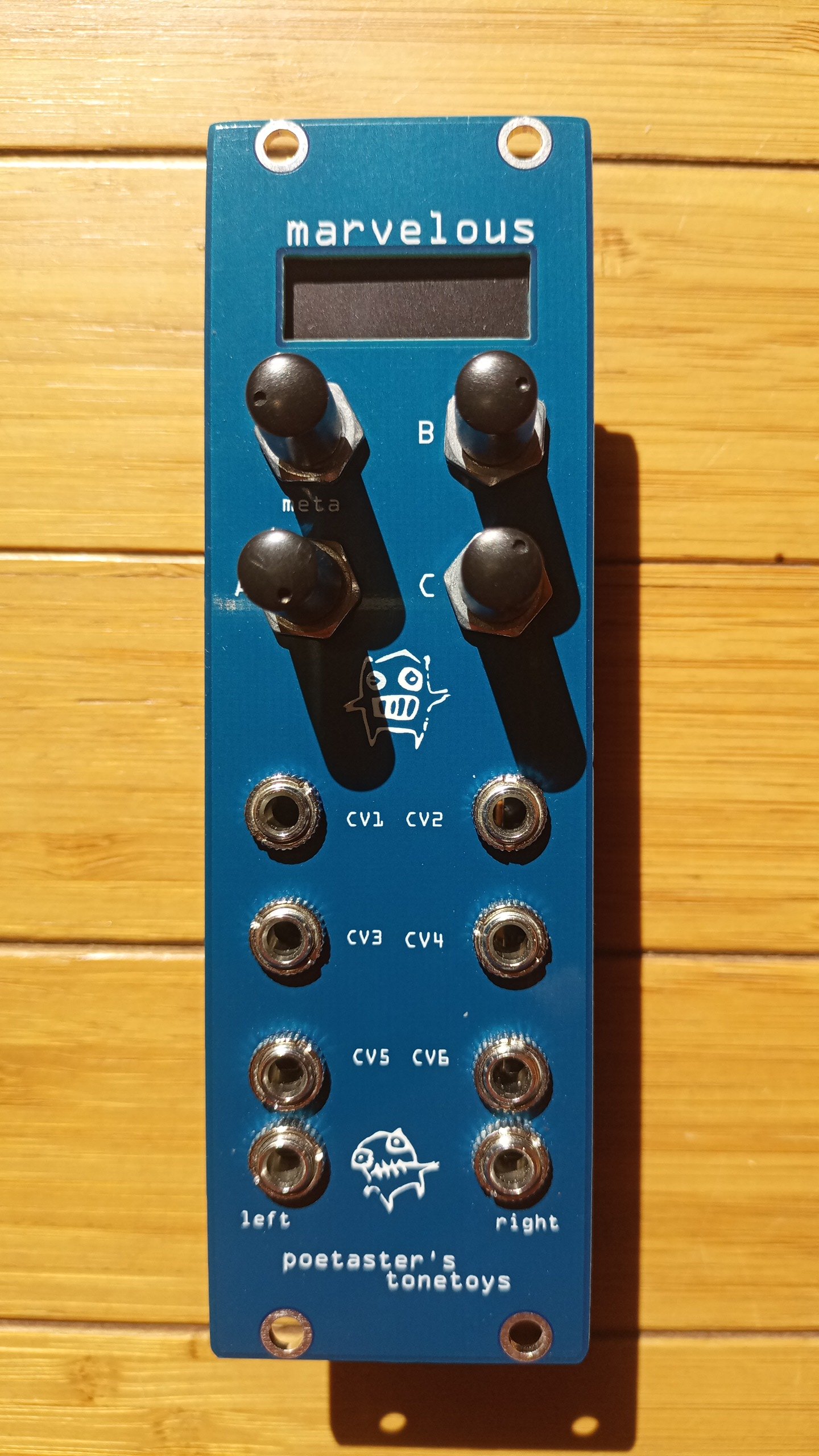
interface!
Jack Connections
The jacks labeled CV are of two types: CV1 and CV2 are safe to 10V and designed for V/OCT and trigger/gate controll. CV1 is V/OCT and CV2 gate/trigger.
CV3-C6 are safe to 7.7V and are used for control signals to modulate parameters:
- CV3 - ‘morph’(M), parameter of Plaits, damping (D), of Rings and color (C), in Braids
- CV4 - ‘harmonics’ (H) param of Plaits, the ‘structure’ (S) of rings and has no function in braids (atm).
- CV5 - ’timbre’ (T) param of Plaits, the ‘brightness’ (B) of rings and the timbre of braids.
- CV6 - ‘position’ (P) param of Plaits and Rings
The Left and Right outputs are directly from the DAC so, stereo. The Rings implementation is not really the original, but close if different in stereo behaviour (among other things.
The meta knob
The meta button/encoder knob, upper left, currently has the following functions:
- Press down to advance through the modules: Plaits, Rings, Braids
- Turn the encoder to advance through the engines of each module
- In ADSR mode (short press C) adjust the Attack amount.
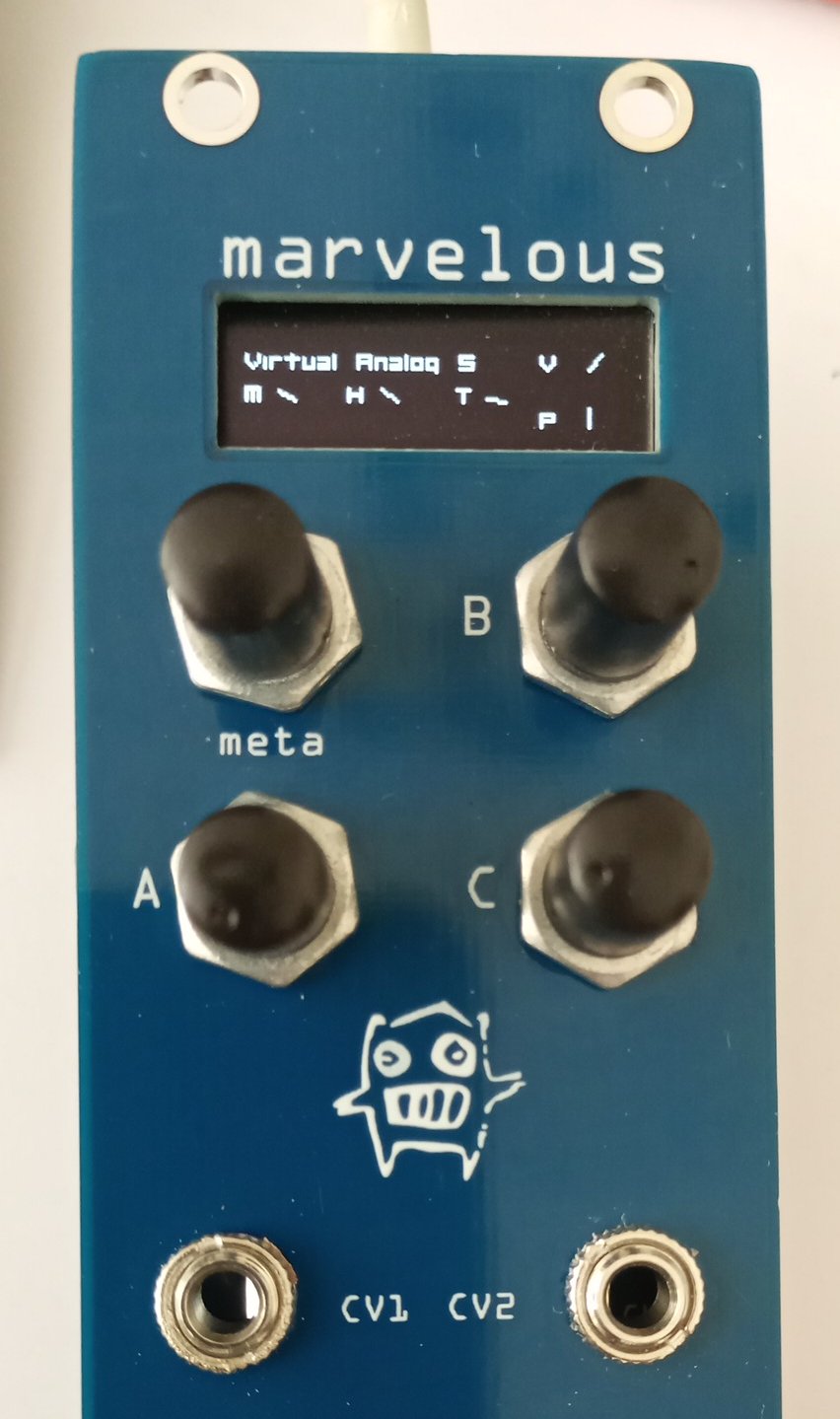
interface!
A/B/C encoders
The 3 remaining encoders directly control the main parameters of each module/engine. And meta parameters like global volume.
- A corresponds to the ‘morph’(M), parameter of Plaits, damping (D), of Rings and color (C), in Braids It is labeled M, D or C in the display.
- B corresponds to the ‘harmonics’ (H) param of Plaits, the ‘structure’ (S) of rings and has no function in braids (atm). It is labeled H or S in the display.
- C corresponds to the ’timbre’ (T) param of Plaits, the ‘brightness’ (B) of rings and the timbre of braids. It is labeled T or B in the display.
The meta functions of each encoder are described in the following ….
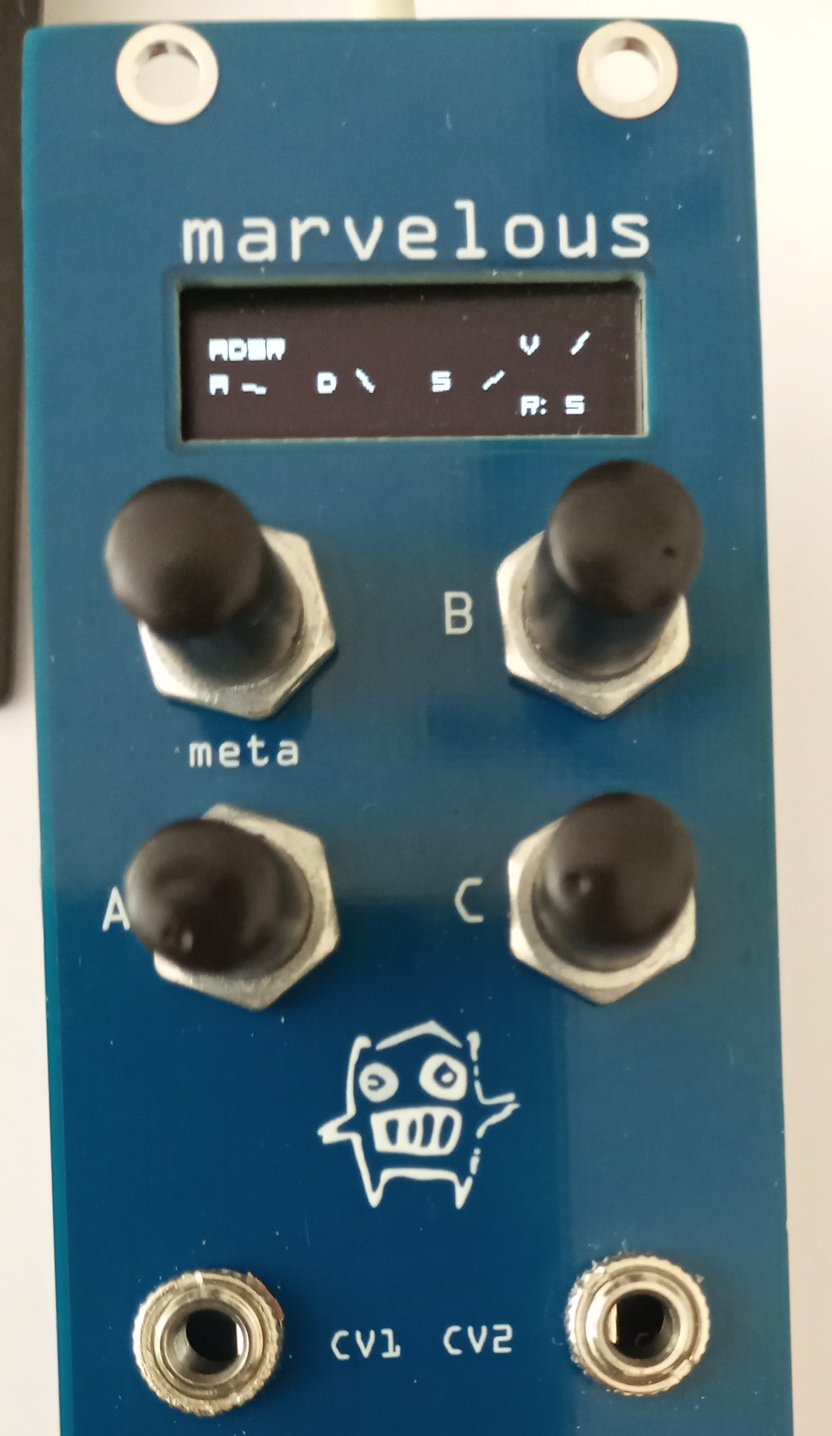
ADSR
In ADSR meta mode (short click C):
- Meta controls the Attack rate
- A controls the decay rate
- B controls the sustain volume
- C controls the release rate
The encoder buttons of A/B/C have various functions.
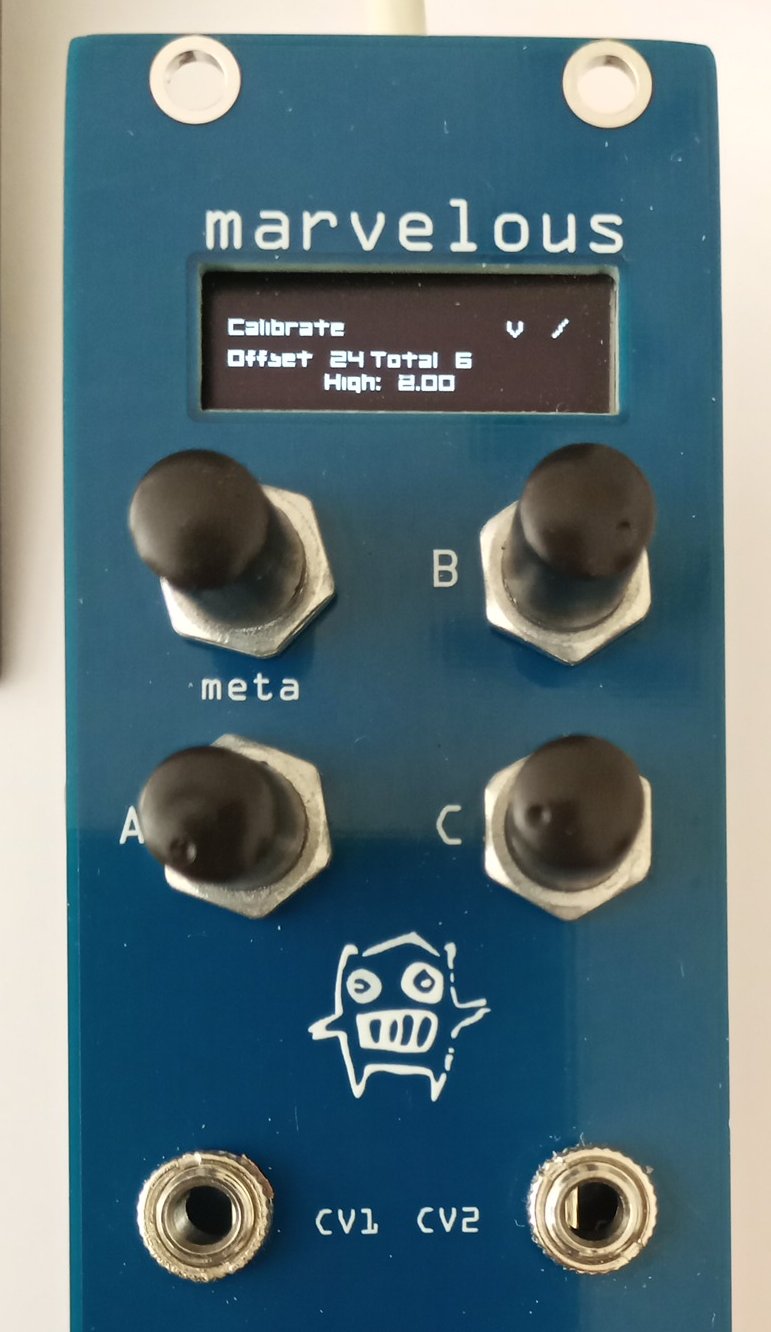
Calibration
A,
- when in Plaits a long press (count 1) takes you to the calibration screen
- In rings, the same long press takes you to rings easter egg (FM synth mode)
In calibration mode,
- the B encoder adjusts offset (intervals to raise) and
- the C encoder the number of octaves.
When in this mode, input the highest voltage you intend to use on CV1. Tracking is accurate for 6 octaves and begins to drift at the extremes (last note in either direction).
B, the b button toggles:
- the B encoder between harmonics ‘H’ (default parameter of the engine) and global volume (‘V’ at the top right).
- the C encoder setting the timbre ‘T’ or the Position ‘P’ parameter (bottom right)
C, pressing the c button toggles ADSR update mode. The four encoders update the ADSR envelope settings and those are displayed.